

Last August, one couple came to us torn between two very different pictures of a week away. On one side, a late dinner in Santa Cruz after a slow walk past the Giralda, with the air still warm at 11pm. On the other, poutine and natural wine in Mile End before live music on Boulevard Saint-Laurent, with sleeves back on by midnight.
We didn’t give them a diplomatic answer, because that rarely helps. Seville and Montreal are both strong city breaks, but they scratch different itches and one of them does a better job for most couples trying to switch off for seven nights without the kids.
This is the version we’d give across the desk, with the awkward bits included, for a couple planning a week away.
Short answer
- Seville Couples who want romance, walkability and strong value in one easy week.
- Montreal Couples who travel stomach-first and want cooler August evenings with city energy.
Getting there is easier in Seville, full stop
For travellers starting in Europe, Seville is a simple win. Seville Airport sits about 20 to 25 minutes by taxi from the centre, and low-cost competition keeps fares sensible for much of the year. From London, Paris, Amsterdam or Milan, you’re usually looking at a short direct flight and a same-day arrival without feeling wrecked. We send plenty of people by train too, especially via Madrid Santa Justa, which is one of the more civilised station arrivals in Europe.
Montreal asks more of you. From most of Europe, North America, the Gulf, Asia or Australia, you’re dealing with a longer long-haul sector into Montréal-Trudeau, then roughly 25 to 40 minutes into town depending on traffic and whether you use the 747 bus, a taxi or rideshare. If you’re travelling from the eastern half of North America, Montreal is straightforward. For almost everyone else, it is the bigger commitment in time, jet lag and airfare.
One trade truth here, because people forget it, Seville often looks awkward on flight search because not every long-haul market gets a neat one-ticket connection. Even then, we still find the total journey less tiring than Montreal for most clients based outside North America. That matters on a one-week break.
Stay in the right district or both cities disappoint
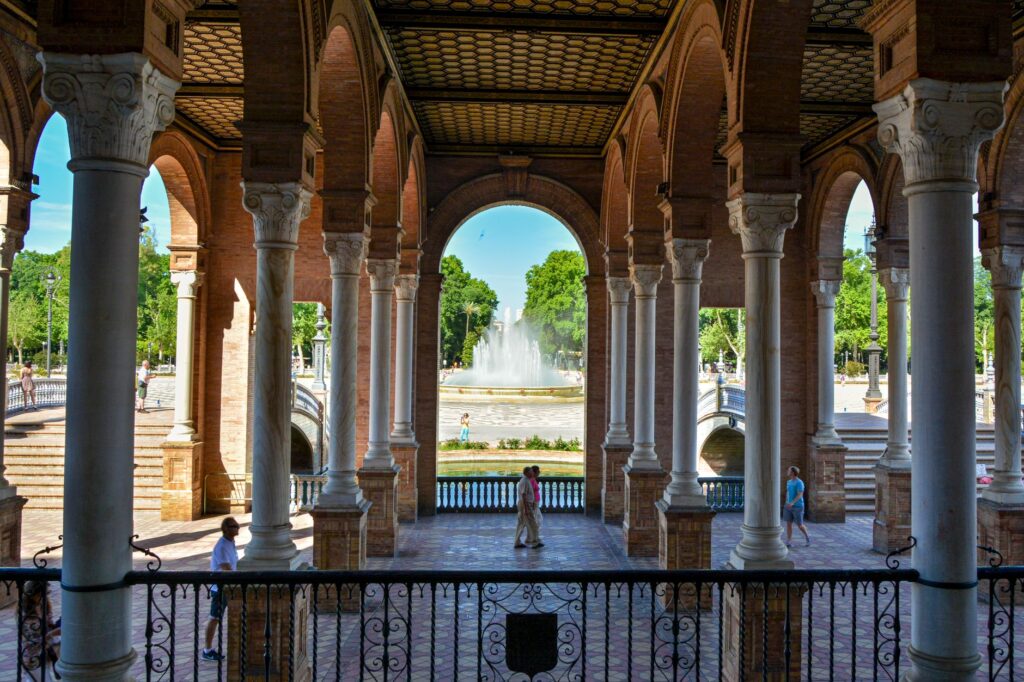
In Seville, we push couples towards Santa Cruz, El Arenal and parts of Centro if the budget stretches, because that is where the city works on foot. Santa Cruz gives you narrow lanes, tiled patios and easy walks to the Alcázar and cathedral, though some streets get noisy and restaurant menus can turn lazy around the main tourist drag. El Arenal is better for evening wandering and access to Triana across the river. Triana itself is a fine choice if you want a more lived-in feel, proper bars and better value, but some first-timers book too far west and spend the week shuttling back.
Montreal is less about a pretty old core and more about choosing a neighbourhood with a rhythm you like. Old Montreal looks great in photos and works for a first stay, with stone streets and easy access to the waterfront, but hotels there often charge heavily for the privilege and evenings can feel stage-set touristy outside peak season. We prefer Plateau-Mont-Royal or Mile End for couples who care about cafés, independent restaurants and walking streets, and Griffintown if modern apartments and canal-side runs matter more than romance.
Seville has the stronger sense of place from the moment you check in. Montreal has more neighbourhood depth over a full week. For a couple who want that instant holiday mood, Seville wins this round comfortably.
The paid sights are stronger in Seville, but Montreal has better free wandering
Seville earns your money. The Real Alcázar is one of the rare big-ticket sights we almost never hear complaints about, as long as you prebook a timed slot. The cathedral and La Giralda are worth doing together, and an evening flamenco show at a serious venue, not a dinner-package trap, can justify the spend. Plaza de España is free, Parque de María Luisa costs nothing, and the whole city rewards aimless walking in a way that many short-break cities don’t.
There are skips too. We often tell clients not to overpay for horse-and-carriage rides and to be wary of restaurants ringing Santa Cruz with laminated photo menus. Metropol Parasol divides opinion. Some love the rooftop views, some tell us it felt expensive for a short visit. We’d spend that money on another long lunch.
Montreal’s paid attractions are less decisive. The Montréal Museum of Fine Arts is solid, the Biodome and Botanical Garden are enjoyable if they match your interests, and the Mount Royal view is the classic city moment, but Montreal’s best quality is actually street-level life. You walk the Plateau, browse Saint-Viateur and Fairmount, spend an afternoon in Jean-Talon Market, and sit by the Lachine Canal. Those are the bits people remember. If you want blockbuster sight-seeing, Seville is better. If you’re happy with neighbourhood days and lighter cultural spending, Montreal closes the gap.

Montreal eats better, Seville drinks better
This is the closest category and the one where Montreal noses ahead. Seville does tapas brilliantly, but people still book it with the wrong idea. You’re not there for one giant dinner every night. You’re there to hop between bars for espinacas con garbanzos, jamón, montaditos, solomillo al whisky and a plate of croquetas, then finish late. In Triana and along Alameda de Hércules, you can still eat very well without paying luxury-city prices. Sherry matters here too, especially if you know the difference between a tourist tasting and a proper taberna pour.
Montreal has more range and, frankly, more ambition. Over a week, you can move from bagels in Mile End to excellent French-influenced cooking, strong Middle Eastern food, serious tasting menus, Portuguese chicken, poutine at the right hour and bars that know their wine. The city is one of the easiest in North America for couples who like planning dinners. We’ve had clients return talking about one tiny bistro in the Plateau more than they talked about anything they saw.
For drinking, Seville is more naturally fun. Vermouth, sherry, cold beer and late-night terrace culture come easily. Montreal’s bar scene is very good, but bills mount fast once cocktails enter the picture. If food is the trip, Montreal wins. If warm-night grazing with easier tabs is the point, Seville feels better.
A realistic daily budget favours Seville by a lot
We’d budget Seville for a couple at roughly EUR 170 to EUR 260 a day for a comfortable week outside the very top hotels. That covers a good central room, breakfast or coffee and pastry, one paid sight, taxis here and there, tapas and drinks, and at least one better dinner during the stay. You can spend less if you stay in Triana or shoulder season. You can spend far more in a luxury boutique hotel, but the city still lets ordinary budgets feel generous.
Montreal lands more in the EUR 240 to EUR 380 a day bracket for the same style of trip. The room rate does a lot of the damage, then restaurant bills, then drinks. Add the exchange rate wobble and taxes, and people often spend more than they expected. We’ve seen this repeatedly with couples who think of Montreal as a casual city and forget they’re still paying North American urban prices.
If you want rough weekly numbers including flights, we usually see Seville come out around EUR 1,900 to EUR 3,000 for two from nearer markets, while Montreal more often lands around EUR 3,000 to EUR 5,000 for two once flights and decent accommodation are folded in. From long-haul origins, both rise, but Seville keeps the better value ratio.
Weather is where Montreal saves itself in high summer
August is the awkward month that changes this comparison a bit. Seville in peak summer is brutally hot. We stopped recommending it for heat-sensitive clients in late July and August years ago unless they genuinely love dry heat, afternoon pool time and very late dinners. Daytime sightseeing becomes a morning-and-evening operation, and the city can feel half-asleep in the fiercest afternoon hours.
Montreal in August is easier on the body. Warm, lively, leafy, and built for outdoor days. Festival season gives it extra lift, terraces are full, and a walk up Mount Royal feels pleasant rather than punishing. The trade-off is humidity, occasional thunderstorms and higher hotel rates around major events, but for summer comfort Montreal wins by some distance.
Our preferred months are simple. For Seville, book March to May, then late September to November. For Montreal, target late May to June and September to early October. January and February are poor choices for most couples in Montreal unless snow and winter culture are the actual point. August is not Seville at its best, and that needs saying plainly.
Who should book which city, and the booking mistake we keep seeing
Seville suits couples who want romance without trying too hard, who like walking, who are happy with a city rather than a beach holiday, and who value atmosphere over constant activity. It does not suit people who need cool weather, huge museums, shopping on a grand scale or lots of day trips by very short train rides. Also, if one of you hates heat, don’t let a cheap August fare talk you into it.
Montreal suits couples who organise trips around meals, neighbourhoods and a few late nights, and who don’t mind paying more for that freedom. It does not suit anyone chasing old-Europe looks, rock-bottom costs or a restful week if they book during a packed festival period and stay in the wrong part of downtown.
The trade advice is this. In Seville, pay attention to room design, not just star rating. Lovely historic buildings often have dark rooms, tiny windows and weak soundproofing. Ask for the exact room type and whether it faces the street or an internal courtyard. In Montreal, watch event calendars before you book flights. Formula 1 weekend, major music festivals and university move periods distort prices fast, and the city can shift from fair value to expensive overnight.
- Seville booking rule: prebook the Alcázar, and avoid midday arrival walks in August.
- Montreal booking rule: check festival dates before choosing your hotel neighbourhood.
- For both: seven nights is enough if you leave gaps in the plan and don’t turn it into a checklist.
For this particular reader, a couple without the kids for one precious week, we’d book Seville nine times out of ten. Book Montreal instead if your travel dates sit in August and you want dinner-led days without the heat tax.
Seville vs Montreal: the side by side
| Seville | Montreal | |
|---|---|---|
| Flight time | Short-haul for Europe, moderate elsewhere | Long-haul for most markets |
| Typical week's cost for two | EUR 1,900 to 3,000 | EUR 3,000 to 5,000 |
| Best months | March to May, Oct to Nov | May to June, Sep to Oct |
| August comfort | Very hot, plan around siesta hours | Warm with humidity, easier overall |
| Equivalent to beach time | River walks and plazas, no beach | Canal, parks and waterfront time |
| Getting around | Compact, mostly walkable | Good metro, wider spread |
| Family suitability | Fine, but heat is hard | Better for mixed-age trips |
| Nightlife | Late tapas bars, flamenco, terraces | Bigger bar scene, pricier nights |
| Romance factor | Higher, especially Santa Cruz and Triana | Cooler, more urban than romantic |
| Food scene depth | Excellent tapas, less range | Broader and stronger overall |
Highlighted cells show where our consultants give the edge.
Holiday Vote recommends
SevilleSpain
Seville wins for most couples
Seville is our winner because a child-free week usually needs to feel easy, atmospheric and worth the money from day one. It delivers that faster than Montreal. You land, drop your bags in Santa Cruz or Triana, and the holiday starts properly, with better sightseeing, lower daily costs and a stronger sense of occasion around ordinary things like dinner or a midnight walk.
We’d switch the booking to Montreal in one clear scenario, your travel window is August and one or both of you wilt in serious heat, or you build trips around restaurant reservations more than landmark visits. In that case, Montreal gives you the better week, even at the higher price.
Which would you book?
0 votes so far
Questions we get asked
Is seven nights too long for Seville?
No, as long as you don't treat it like a two-day checklist. Build in slower afternoons, a flamenco night and one day trip if you like, and the city carries a week well.
Does Montreal feel romantic enough for a couples trip?
Yes, but in a cooler, more urban way than Seville. Think canal walks, wine bars, terrace dinners and neighbourhood wandering rather than grand old-world romance.
Can we do Seville without hiring a car?
Easily. Stay central and you will walk most places, with the occasional taxi in the heat or late at night.
Will we overspend in Montreal?
Many couples do, mainly on hotels, drinks and spontaneous dinners. Set a proper food budget before you go and book a hotel near the areas you want to use, so you are not paying for transport on top.
Which city is better in August specifically?
Montreal, without much argument. Seville's heat changes the shape of the day, while Montreal is still set up for outdoor living and late evenings.
Other matchups