
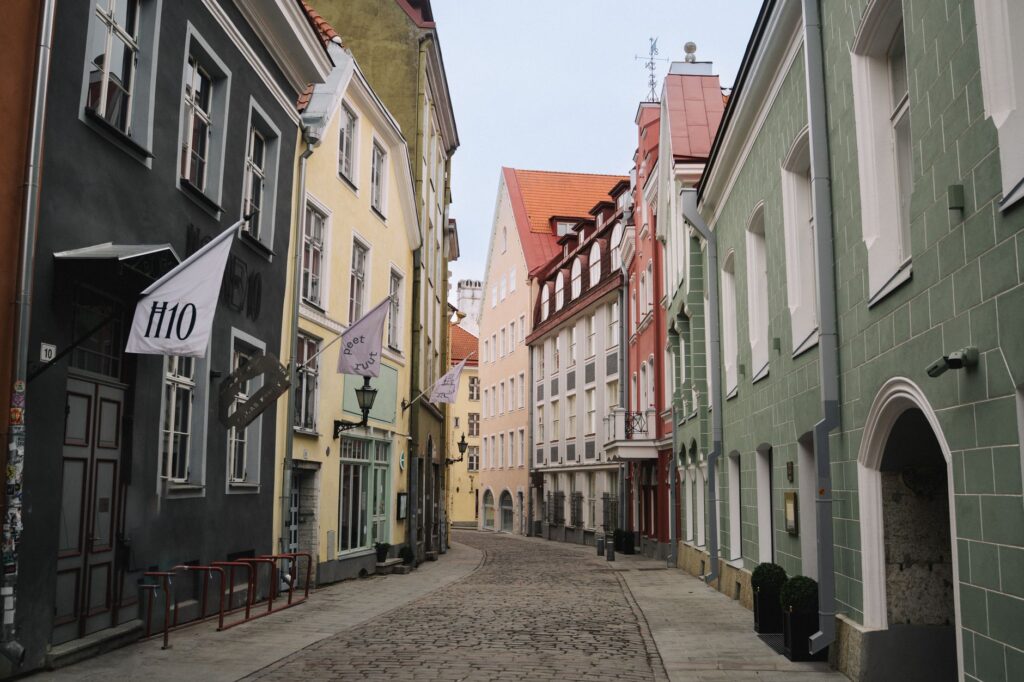
Last week a couple from Toronto came to us with the same brief we hear every August, four or five nights, no frantic sightseeing, good beds, short walks between stops, and enough interest to fill a day without needing a spreadsheet. They had narrowed it down to Riga and Tallinn because both felt manageable, both looked handsome in photos, and both sat in the sweet spot between Western European prices and proper city substance.
We didn’t give them the polite non-answer. We rarely do. Riga is the better buy if you care about restaurant prices, Art Nouveau streets and a city that feels less polished and more lived in. Tallinn is the easier holiday, the neater old core, the calmer rhythm, the simpler choice for older travellers who want comfort without working for it.
That’s the lens for this piece, older travellers coming from anywhere in the world, willing to pay for comfort but still glad to get value, and wanting a city break that feels civilised in August rather than hard work.
Short answer
- Riga Book Riga if you want better value, stronger food and enough substance for a longer slow trip.
- Tallinn Book Tallinn if you want the easiest, neatest short break with comfort built into the layout.
Getting there is easier than people expect
Neither city is a hard sell on access. Riga International Airport sits about 10km from the centre, and the taxi or Bolt ride into Vecriga or the Quiet Centre is often 20 to 30 minutes outside peak traffic. Tallinn Airport is even handier, roughly 4km from the centre, and that matters more than people think after a long long-haul journey with a connection. From the terminal to a hotel around Viru or the Old Town, you are often looking at 15 minutes by taxi.
For travellers starting in Europe, Riga usually has the slightly broader choice of direct flights and often sharper fares. For long-haul travellers from North America, Asia or Australia, both usually mean one change, commonly via Helsinki, Stockholm, Frankfurt, Amsterdam or another major hub. We tell clients to think less about headline flight time and more about connection pain. Tallinn wins there. The airport is small, calm and close. Riga’s airport is perfectly workable, but the arrival still feels more like a standard city transfer.
On pure ease, Tallinn takes this round. If you are tired, jet-lagged or simply done with dragging a suitcase, shaving even 20 minutes off the final leg improves the whole trip.
Where to stay if you want comfort and quiet nights
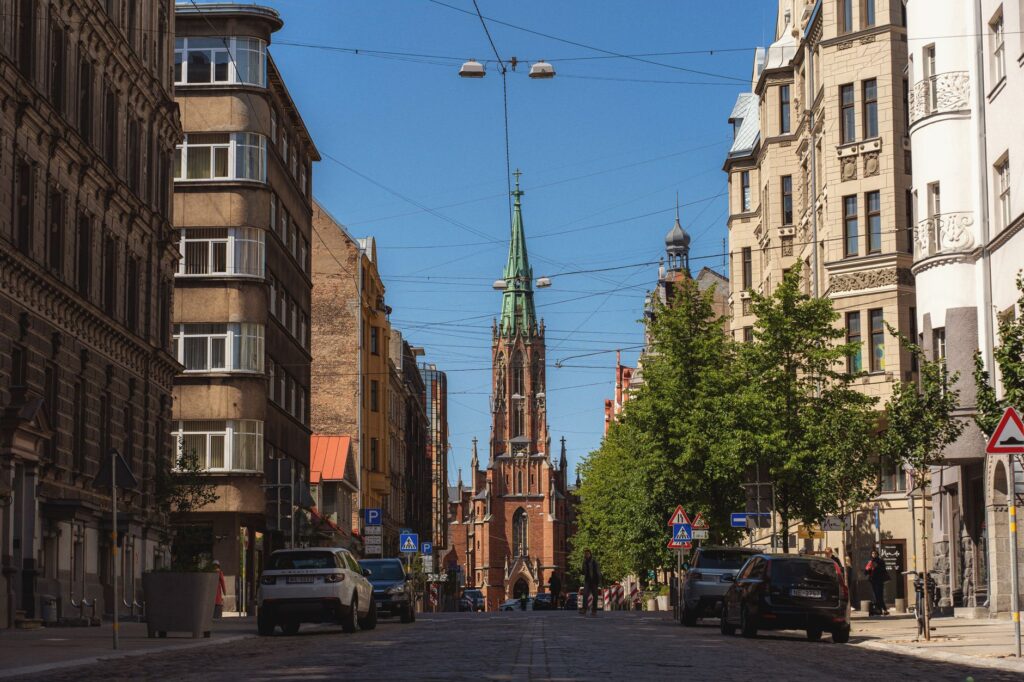
In Riga, we steer older clients toward the Quiet Centre, around Alberta iela, Elizabetes iela and the embassy district, or the edge of Vecriga rather than the heart of it. The Quiet Centre gives you handsome façades, leafy streets and a gentler evening mood, with a 10 to 20 minute stroll or short taxi ride to the main sights. Vecriga itself is pretty, but some lanes near the busiest bars and beer cellars get noisy, especially on Friday and Saturday. We’ve had clients who loved the location at breakfast and regretted it at 1am.
Tallinn is simpler. The Old Town works well if you stay on the quieter upper side near Toompea or just outside the walls around Rotermann and the Viru area, where hotels are modern and lifts are more reliable. We like Rotermann for travellers who want comfort first, because you get easy pavements, smart restaurants and a flat walk into the medieval core. Kalamaja has charm and excellent food, but for older visitors it is better as a dinner or half-day neighbourhood than a base.
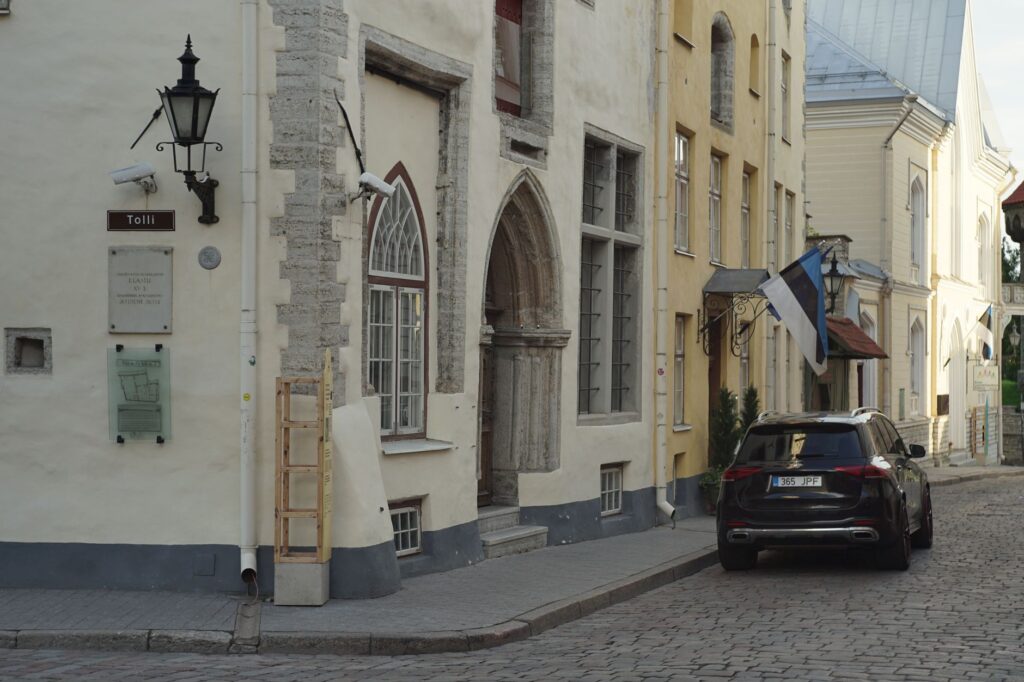
There’s another practical point. Riga’s street surfaces in the old centre can be awkward, cobbles mixed with uneven paving, and the city is more spread out. Tallinn’s core is still cobbled, especially on the climb to Toompea, but most of what people come to see sits closer together. For a slow-paced short break, Tallinn is the easier place to inhabit.
The paid sights that earn their ticket
Riga’s strongest cards are architectural and atmospheric. The Art Nouveau Museum is worth your time, and simply walking Alberta iela and the surrounding streets gives you one of the best concentrations of early 20th-century architecture in Europe. The House of the Black Heads is worth paying for if you enjoy restored interiors and local history told clearly. We are less keen on piling money into every church tower and every small museum. The Occupation Museum is important, but emotionally heavy, so we suggest balancing it with a lighter afternoon.
Tallinn’s best paid sight is Kiek in de Kok and the Bastion Passages, partly because it adds context to the old fortifications people spend the rest of the trip admiring from outside. Kadriorg Palace and KUMU are both strong if you like art and grand interiors, and they pair well in one outing. St Olaf’s or Town Hall tower views are fine on a clear day, but older travellers who dislike steep climbs should skip the effort. A lot of Tallinn’s pleasure comes free, wandering the lanes, viewpoints at Kohtuotsa and Patkuli, and sitting with coffee in one of the squares.
Here Tallinn wins again, narrowly. Riga has more variety across a longer stay, but Tallinn makes it easier to spend on one or two worthwhile sights and let the city itself do the rest. That suits an easy pace better.
Riga eats better, Tallinn drinks better
We are pretty firm on this. Riga has the stronger food scene for the money. You can eat very well around Miera iela, the Central Market area and the streets between the Freedom Monument and the Quiet Centre without paying silly prices. Look for Latvian rye bread, grey peas with bacon, smoked fish, mushroom dishes and decent seasonal menus. The Central Market is still worth a visit for the scale and the produce, though we tell clients to treat it as a browse-and-snack stop rather than the place for a leisurely lunch.
Tallinn has improved enormously and there are very good meals in Rotermann, Telliskivi and Kalamaja, but prices jump faster than first-time visitors expect. Estonia’s capital is no bargain basement now, especially in polished old-town rooms where the setting does a lot of the charging. That said, Tallinn is excellent for café culture, craft beer and an unhurried lunch. We’ve had older clients who loved taking the tram out to Kadriorg, lingering over coffee and cake, then returning for a straightforward fish dinner near the centre.
Two warnings. In Riga, some old-town restaurants on the busiest tourist lanes trade on costumes and cellar ambience more than quality. In Tallinn, the Town Hall Square area has the same issue. Step two or three streets away in either city and dinner improves fast. Food goes to Riga, clearly.
A realistic daily budget, not fantasy pricing
Riga remains one of the better-value capital breaks in this part of Europe. For a comfortable older couple, we would budget roughly 140 to 210 EUR per day excluding flights, based on a good mid-range hotel, café breakfast or hotel breakfast, one paid sight, taxis when needed, and a proper dinner with wine. Push to a smarter hotel in the Quiet Centre and you move above that, but the city still gives back in restaurant bills.
Tallinn needs a touch more breathing room. A comfortable day for two often lands around 170 to 250 EUR excluding flights, especially in August when demand is strong and cruise traffic keeps the centre lively. Hotels around the Old Town and Rotermann price confidently in summer. Local transport is cheap, coffee is not outrageous, but evening dining narrows the gap less than people expect.
If value is the deciding factor, book Riga and don’t overthink it. It is the cheaper week, plain and simple.
- Riga: good 4-star hotel from roughly 90 to 150 EUR a night, main course often 12 to 22 EUR, taxi across town usually modest.
- Tallinn: good 4-star hotel from roughly 120 to 190 EUR a night in peak summer, main course often 16 to 28 EUR, airport taxi cheap because it is so close.
Weather, pace and the months we steer people toward
August is a strong month for both cities, with long days mostly gone but still enough light for late dinners and evening walks. Daytime temperatures often sit in the high teens to low twenties Celsius, sometimes warmer. Rain arrives in both, so pack a proper light waterproof and shoes that handle slick cobbles. We have learned the hard way that older clients remember a soaked uneven pavement more vividly than a museum.
For the best balance, we favour late May, June and early September. Those periods give you decent weather, fewer crowds and slightly softer hotel rates. July and August are the warmest, but also the busiest, especially in Tallinn where day visitors and cruise calls can make the old centre feel crowded by midday. Riga absorbs summer traffic better because it spreads out more.
We stop pushing either city for comfort-first travellers from November through March unless they actively want Christmas markets or winter atmosphere. Short daylight, icy paving and grey skies flatten both places. Tallinn’s old walls and towers still look romantic in snow, but real life is colder than the brochure. For shoulder season comfort, Riga has the edge. For peak-summer polish, Tallinn does.
Who each city suits, and who should leave it alone
Riga suits older travellers who still enjoy a proper city rather than a preserved stage set, who like architecture, food and a little roughness around the edges. It is the better booking for seven nights than Tallinn, especially if you add Jurmala for a seaside day or use the city at a slower pace with long lunches and half-day museum visits. It does not suit travellers with significant mobility issues who want to do everything on foot, and it does not suit anyone expecting every central street to feel immaculate and hushed.
Tallinn suits older travellers who want things easy. The city is compact, signage is straightforward, the airport transfer is short, and you can see a satisfying amount without racing. It works beautifully for three to five nights. It does not suit travellers who dislike tourist concentration in core historic areas, and for a full week some clients run out of momentum unless they add Kadriorg, Pirita, Telliskivi and perhaps a day trip.
We also need to kill one common mistake. People assume Tallinn has the stronger beach option because of Pirita, but neither city is a beach holiday. Pirita is decent for a breezy walk and a summer glance at the sea, not the reason to book Estonia. If a proper sandy seaside day matters, Riga has the better add-on because Jurmala is an easy train trip and genuinely enjoyable in summer.
The booking advice we only learned by selling both for years
For Tallinn, pay attention to cruise schedules before you choose your hotel and sightseeing days. On heavy cruise days, the Old Town can feel much fuller between late morning and mid-afternoon, especially around Raekoja plats and the main gates. We often book older clients into Rotermann, tell them to visit Toompea early, then do Kadriorg or KUMU once the centre thickens. It changes the feel of the holiday.
For Riga, room orientation matters more than star rating. A handsome old-town room above a lively lane can be poorer value than a slightly less romantic room in the Quiet Centre with proper sound insulation and a lift that works. We ask hotels specific questions on street noise, air conditioning and walk-in showers because glossy photos hide all three. August can still be warm, and older historic buildings do not always handle heat gracefully.
One final trade tip. If you are flying in from long-haul markets, don’t force a two-centre split unless you have at least a week. The bus between Riga and Tallinn takes several hours, the scenery is fine rather than memorable, and swapping hotels burns energy you should spend enjoying dinner. For this readership, one city done properly beats ticking off both.
Riga vs Tallinn: the side by side
| Riga | Tallinn | |
|---|---|---|
| Flight time | Usually one stop long-haul | Usually one stop long-haul |
| Airport to centre | 20 to 30 minutes | 15 minutes often |
| Typical week's cost for two | Around 1,400 to 2,100 EUR | Around 1,700 to 2,500 EUR |
| Best months | May, June, early September | June, August, early September |
| Beach equivalent | Jurmala day trip is strong | Pirita is pleasant only |
| Getting around | Walk plus taxis or trams | Compact, easy on foot |
| Family suitability | Good for older teens | Better for mixed ages |
| Nightlife | Livelier, broader choice | Smarter, smaller scene |
| Old town comfort | Prettier than practical | More manageable and compact |
| Food value | Stronger meals for less | Good, but pricier |
Highlighted cells show where our consultants give the edge.
Holiday Vote recommends
TallinnEstonia
Tallinn wins for easy comfort
For older travellers who want comfort and an easy pace, we send more people to Tallinn. The airport is close, the centre is compact, the hotel zones are simpler to judge, and the city gives a satisfying few days without demanding much stamina. It feels organised in the best way, and that matters on a holiday where ease is the whole point.
We switch to Riga in one clear scenario, when the traveller wants better value, better food and a city with more breadth for five nights or more. If your knees are good, your curiosity is broad and you dislike places that feel a bit polished for visitors, Riga is the stronger booking.
Which would you book?
0 votes so far
Questions we get asked
Is Tallinn too small for a week?
For many older travellers, yes, unless you plan slower days and a couple of neighbourhood outings. We prefer Tallinn for three to five nights, then it feels complete rather than stretched.
Is Riga noisy at night?
Parts of Vecriga are, especially on weekends. We usually book older clients in the Quiet Centre or on the calmer edge of the old centre and ask specifically about street-facing rooms.
Which city is easier with limited mobility?
Tallinn is easier overall because the airport is close and the core is compact. Both cities have cobbles, and Tallinn's route up to Toompea is steep, so hotel location matters.
Are the beaches worth planning around?
No, not as the main reason for the trip. Jurmala is a worthwhile summer add-on from Riga, while Pirita in Tallinn is pleasant for a stroll rather than a proper beach holiday centrepiece.
Do we need cash in either city?
Very little. Cards are widely accepted in both cities, including cafés and taxis, though carrying a small amount of EUR for markets or minor purchases is still sensible.
Other matchups